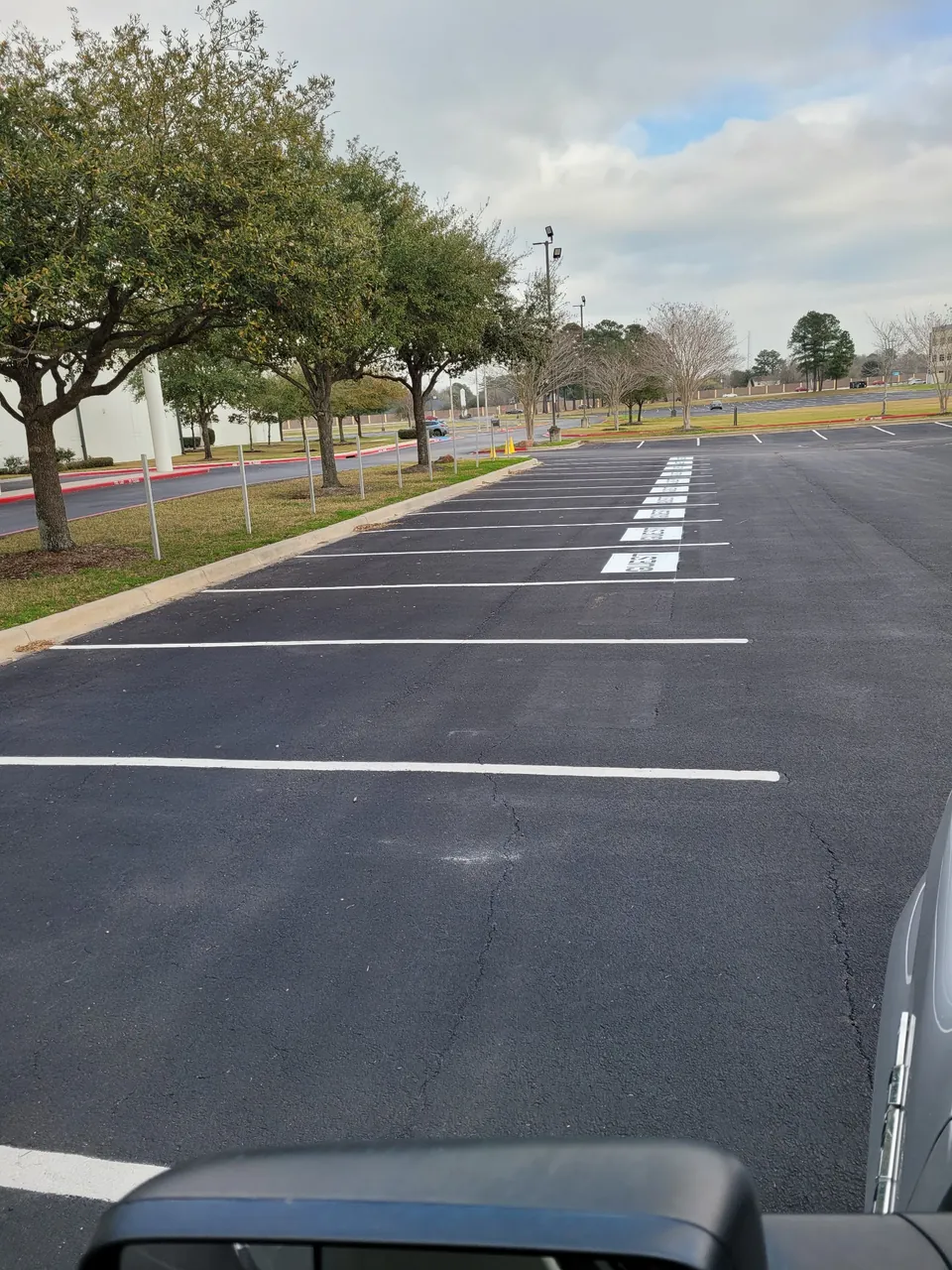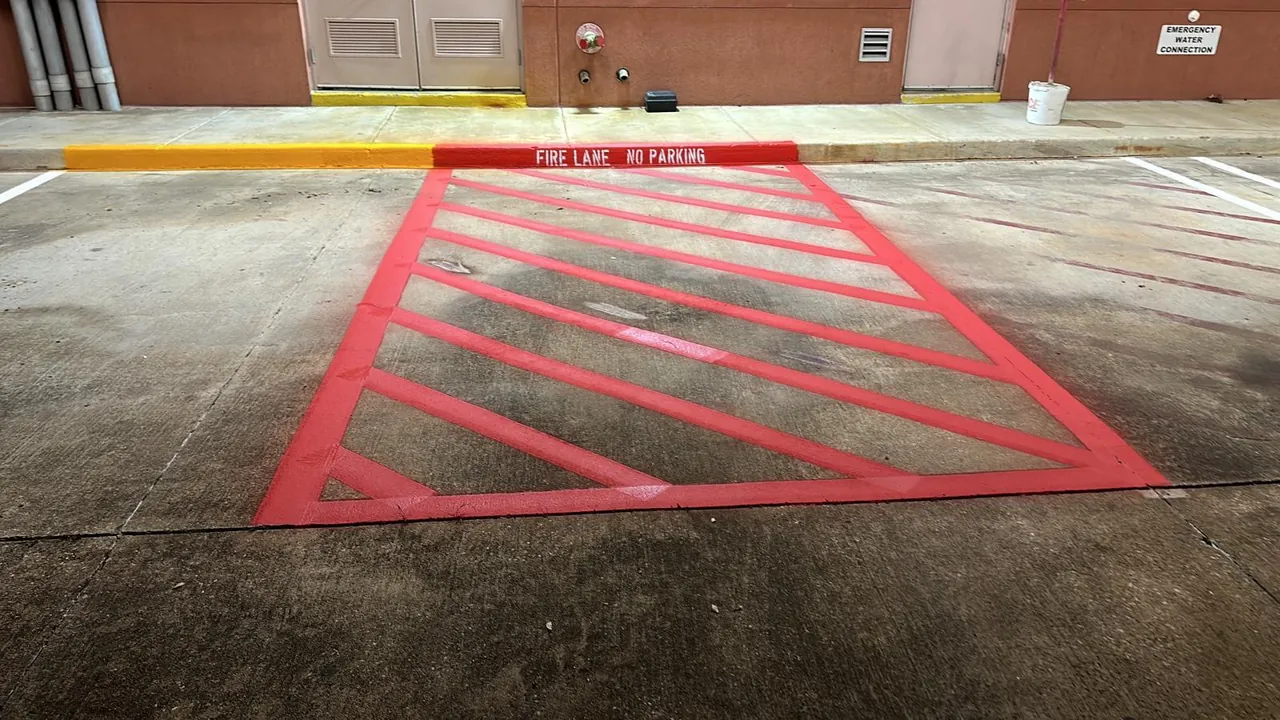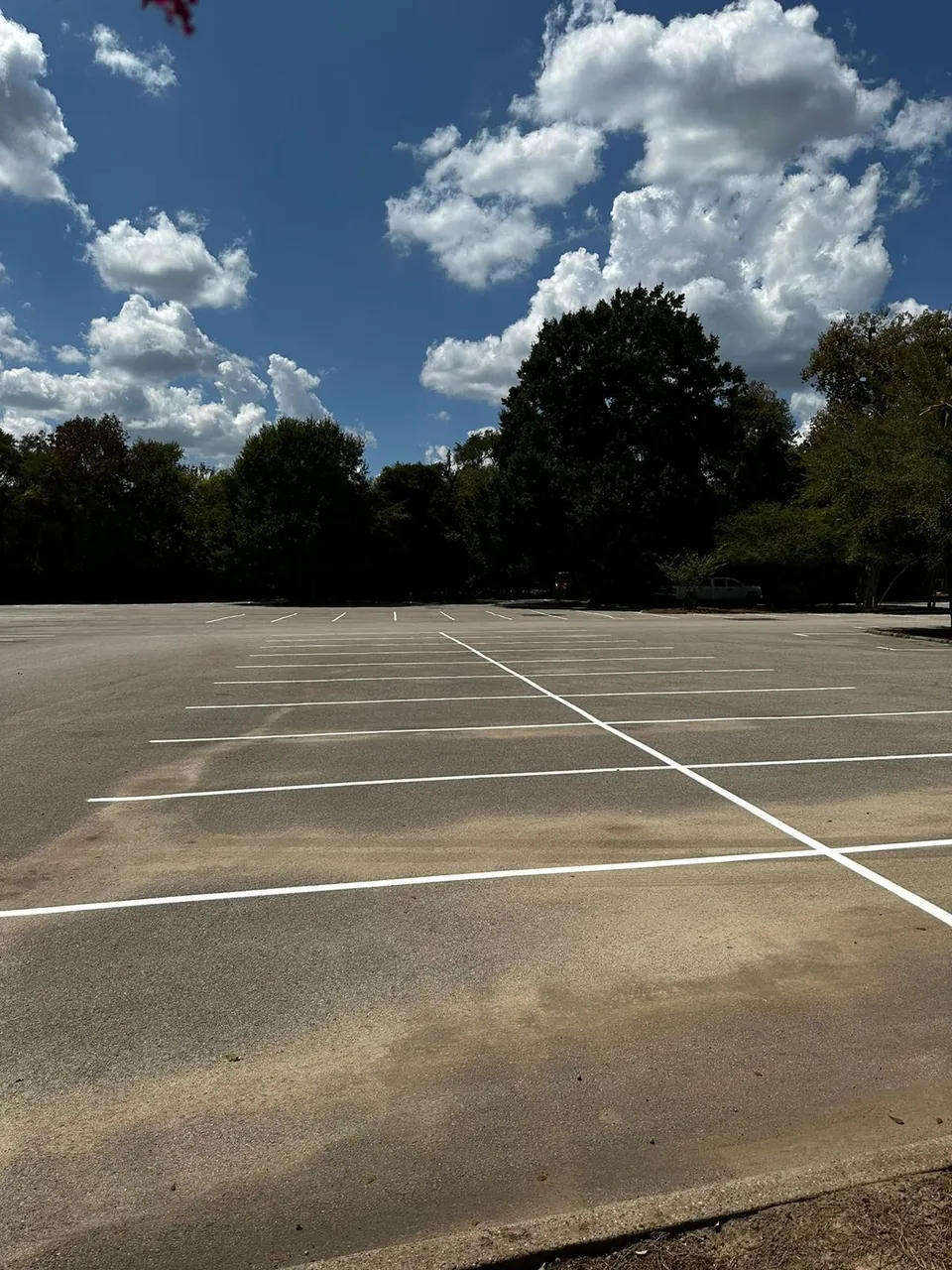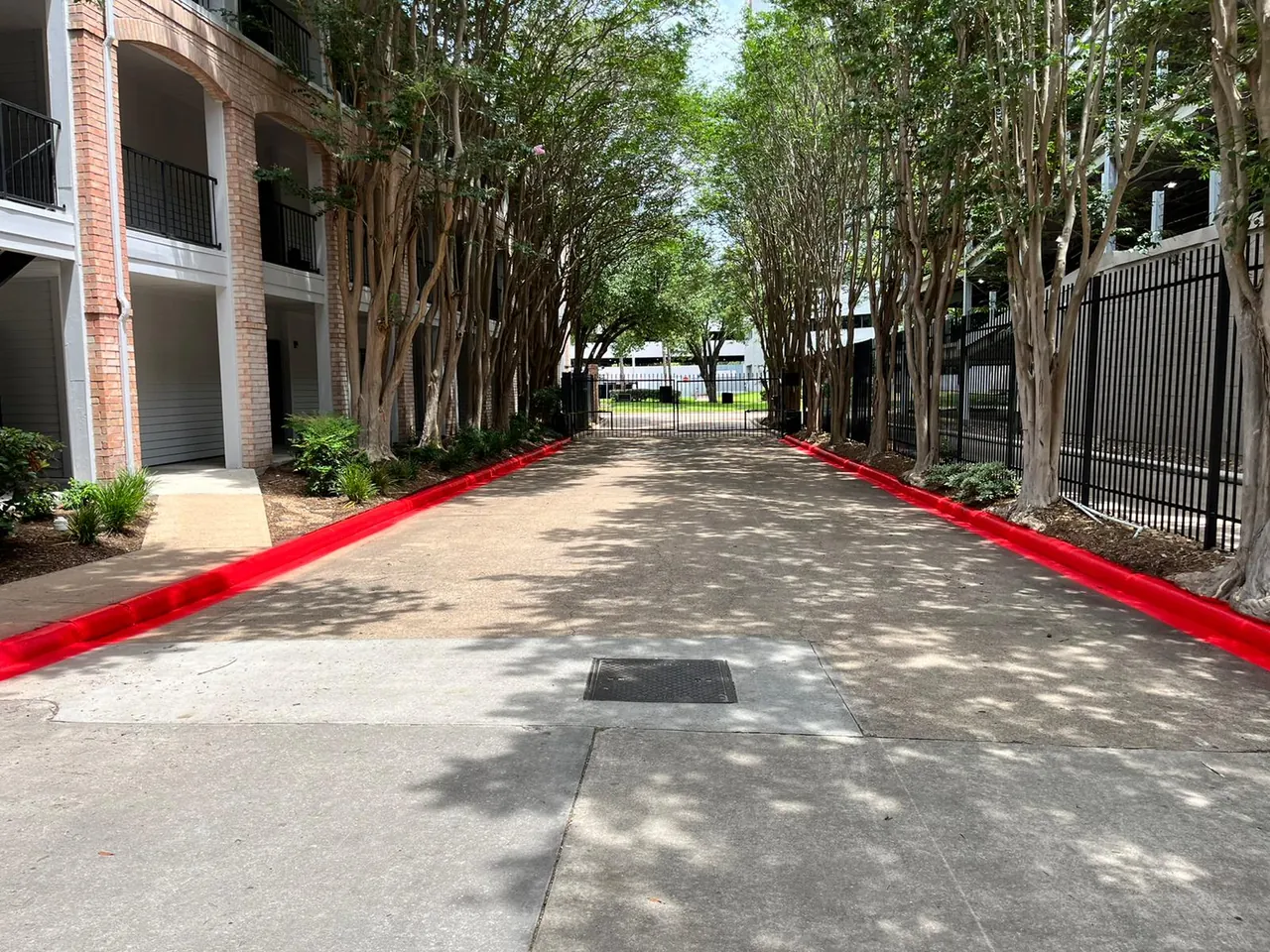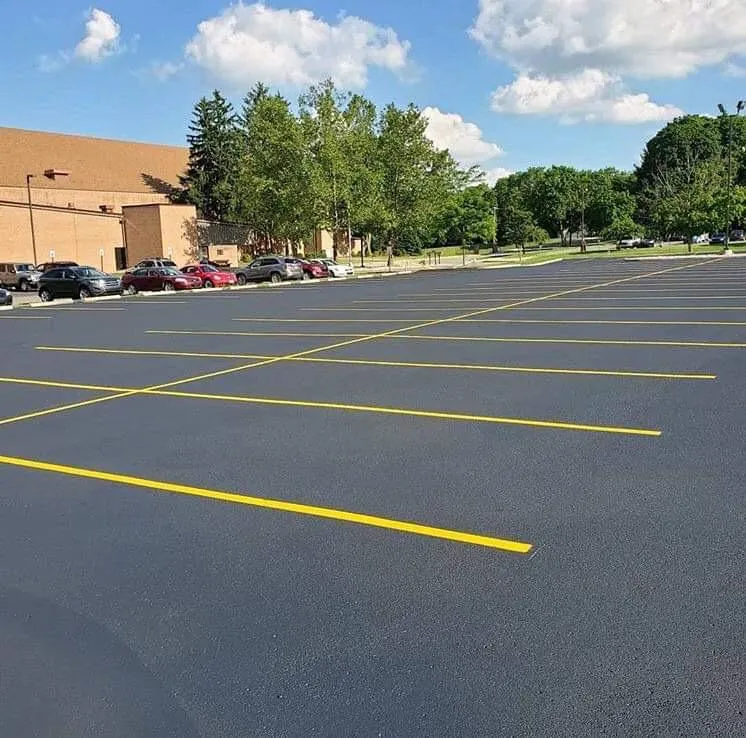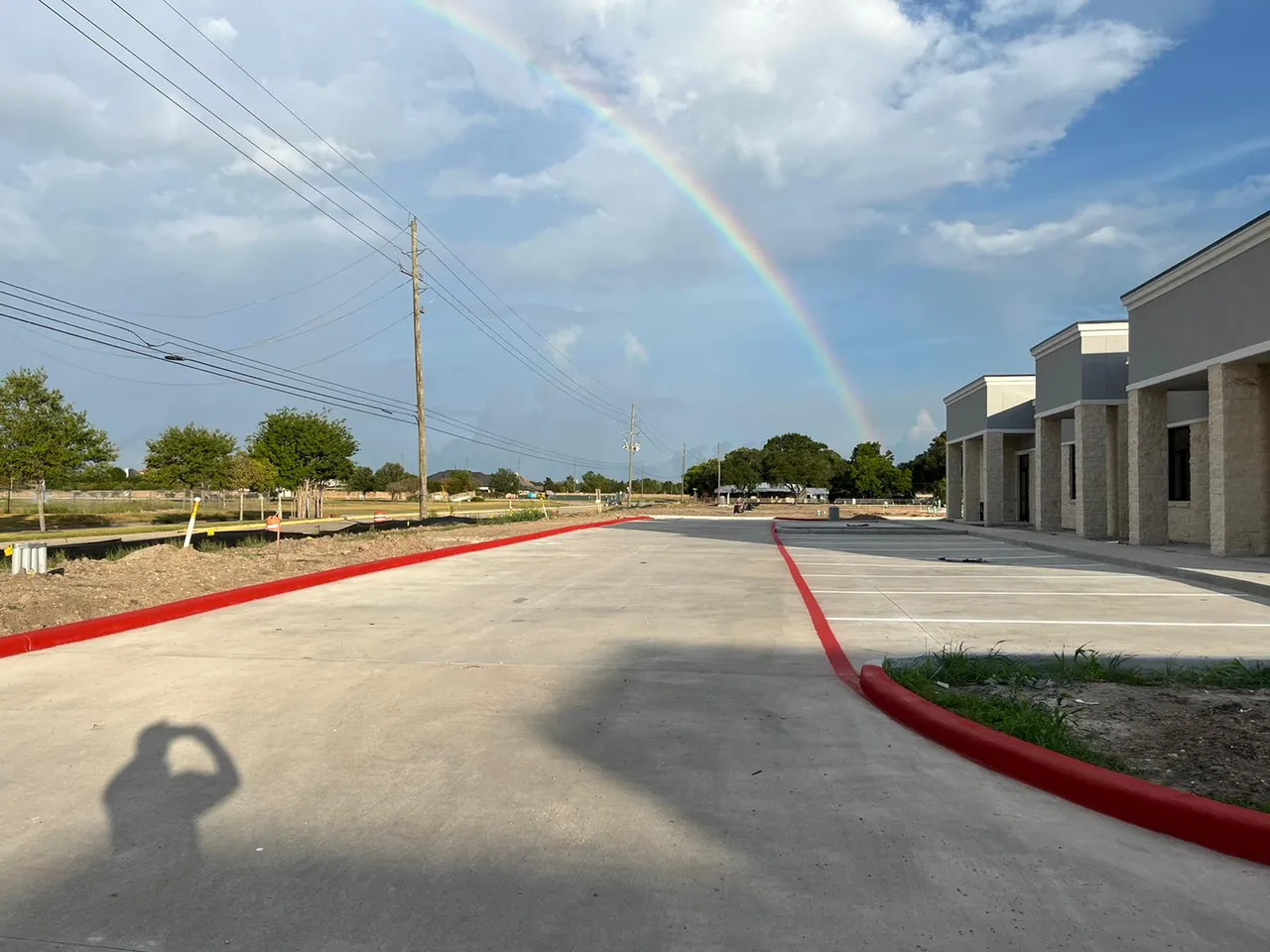
An attractive pavement pattern still needs to communicate a clear instruction. Start with the property's functional layout, then consider whether a custom treatment adds useful information or merely makes the surface busier.
Define the problem before the pattern
Identify whether the request concerns faded parking bays, a confusing route, a reserved use or a decorative area. These are different briefs. Show the existing arrangement in wide photographs and explain what a visitor should understand after the work.
Do not use decorative lines to imply an extra parking bay, crossing or circulation route that has not been reviewed.
Keep required instructions recognizable
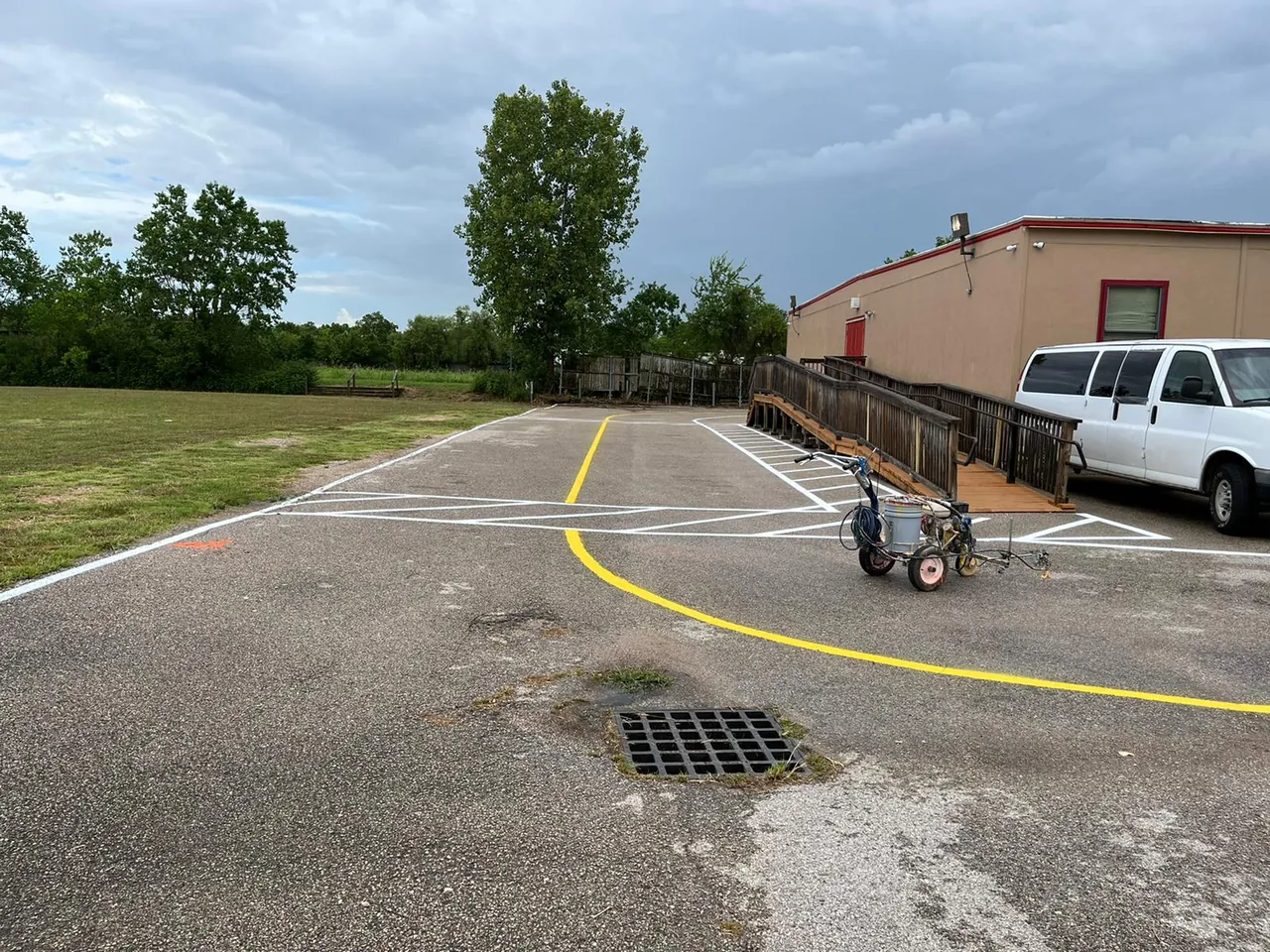
Where applicable requirements control the symbol, color or arrangement, follow the relevant plan and instructions rather than a brand palette. Keep accessible parking, fire access and traffic directions distinct from optional artwork.
A painted motif is not a substitute for signs, physical separation or a complete accessible route.
Review the actual surface
Show joints, drains, old markings, obstacles and the areas that parked vehicles cover. Consider how the pattern will read from the intended approach, not only from an aerial drawing. Identify any removal or surface work separately.
Confirm the exact artwork and dimensions before asking for a coating quantity. Large solid areas and narrow stripes are not measured in the same way.
Agree maintenance and access
Discuss the proposed material, preparation, work zones and reopening instructions. A custom design may involve different staging and future maintenance from a simple refresh. Do not assume every color or effect is available in a suitable pavement coating.
Send the property address, photographs, proposed purpose and any relevant plans. We can help turn the marking request into a clear scope for discussion.