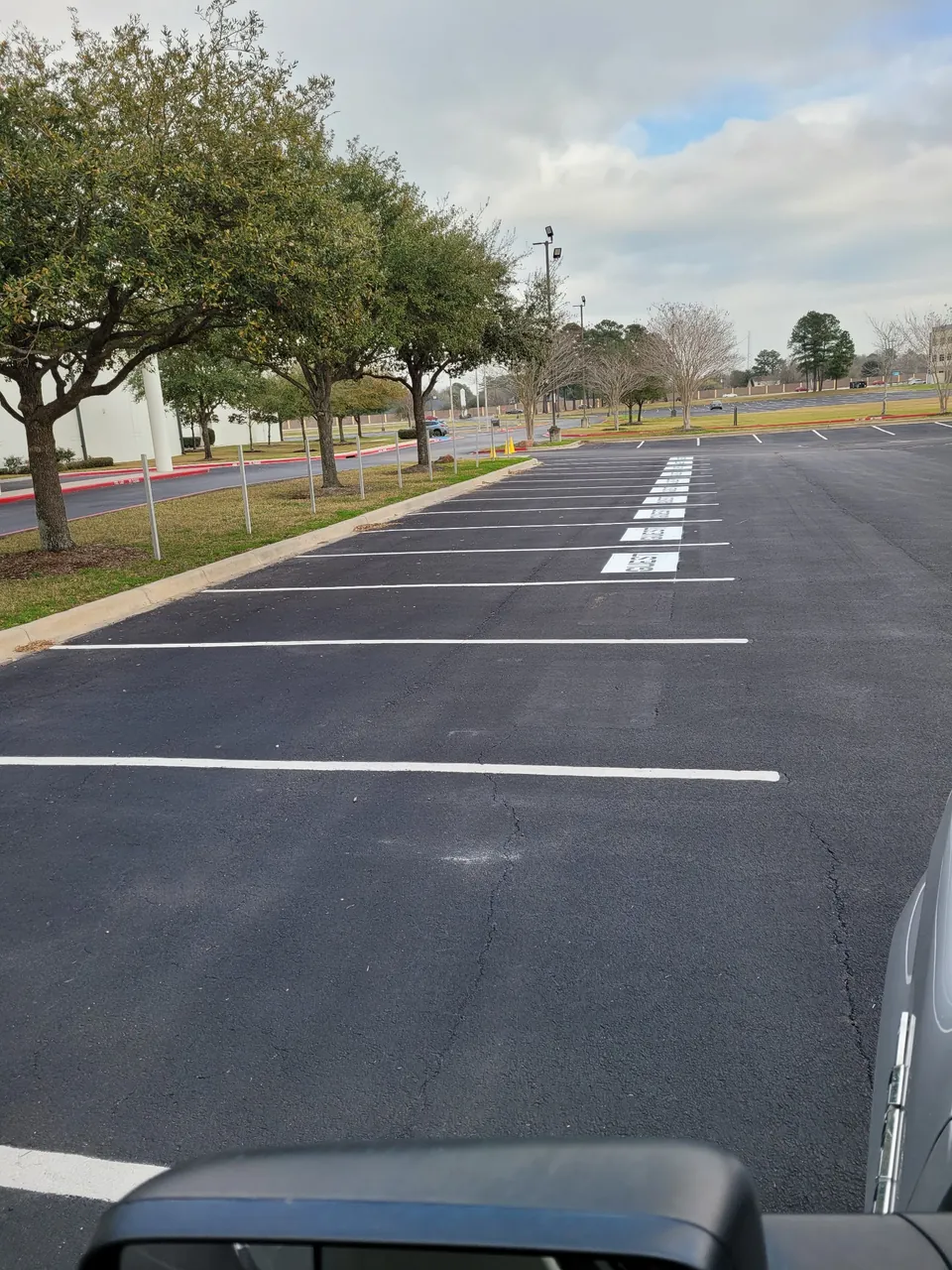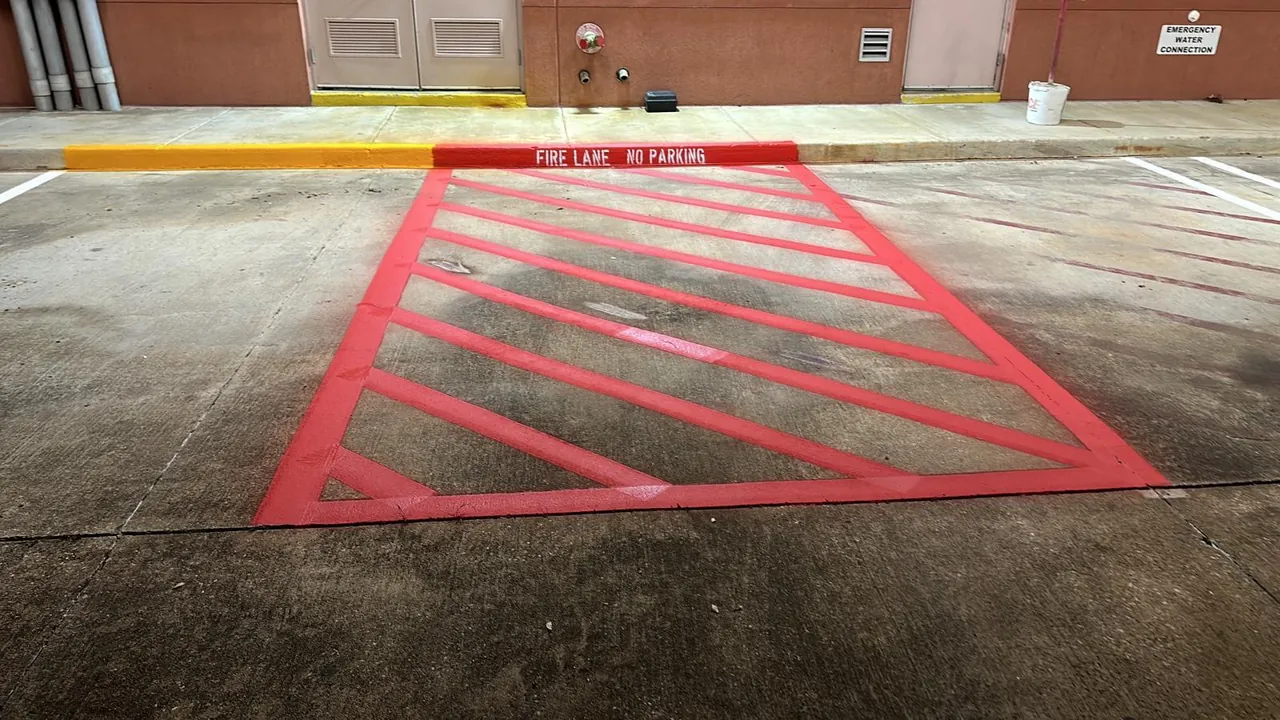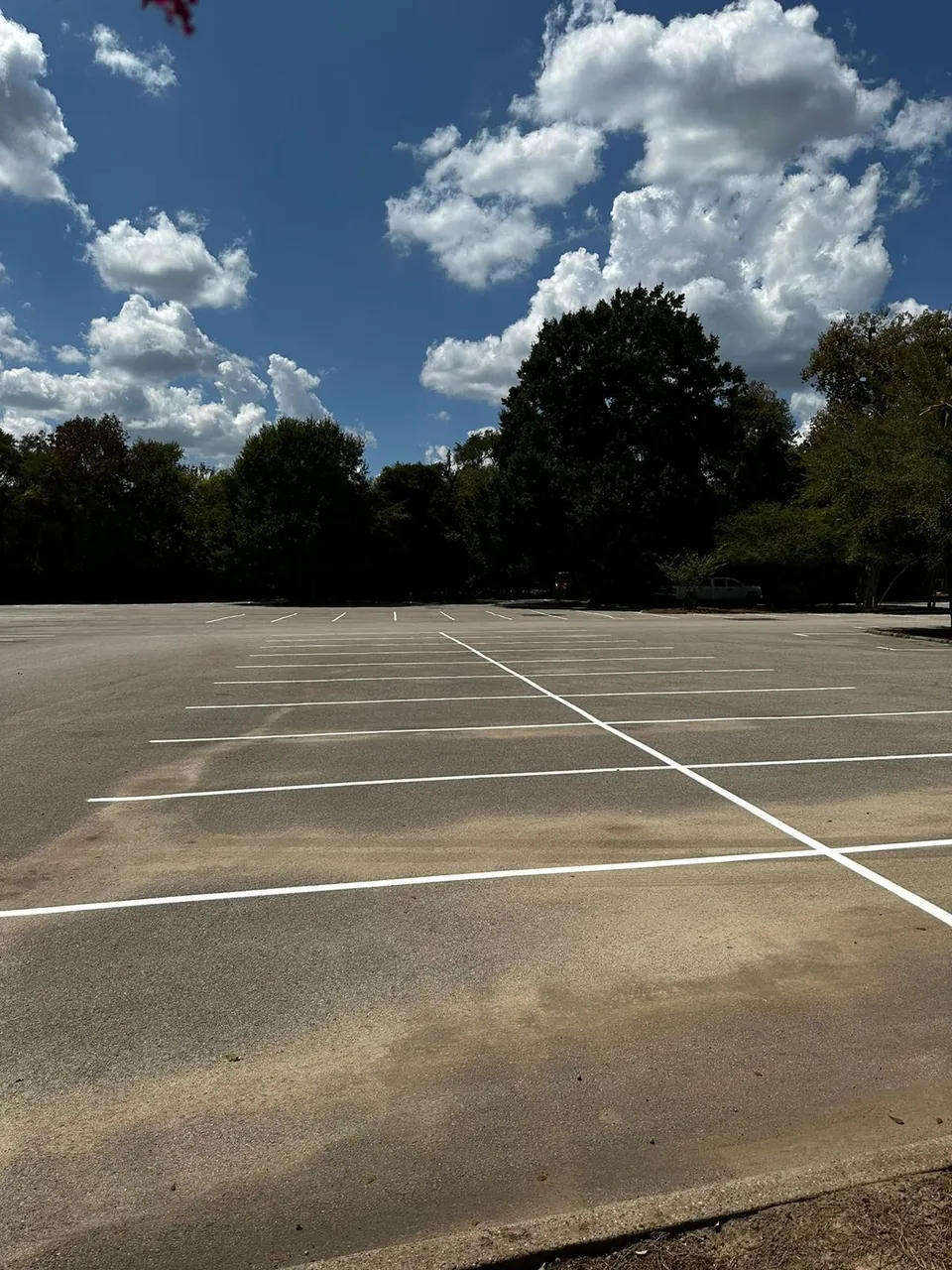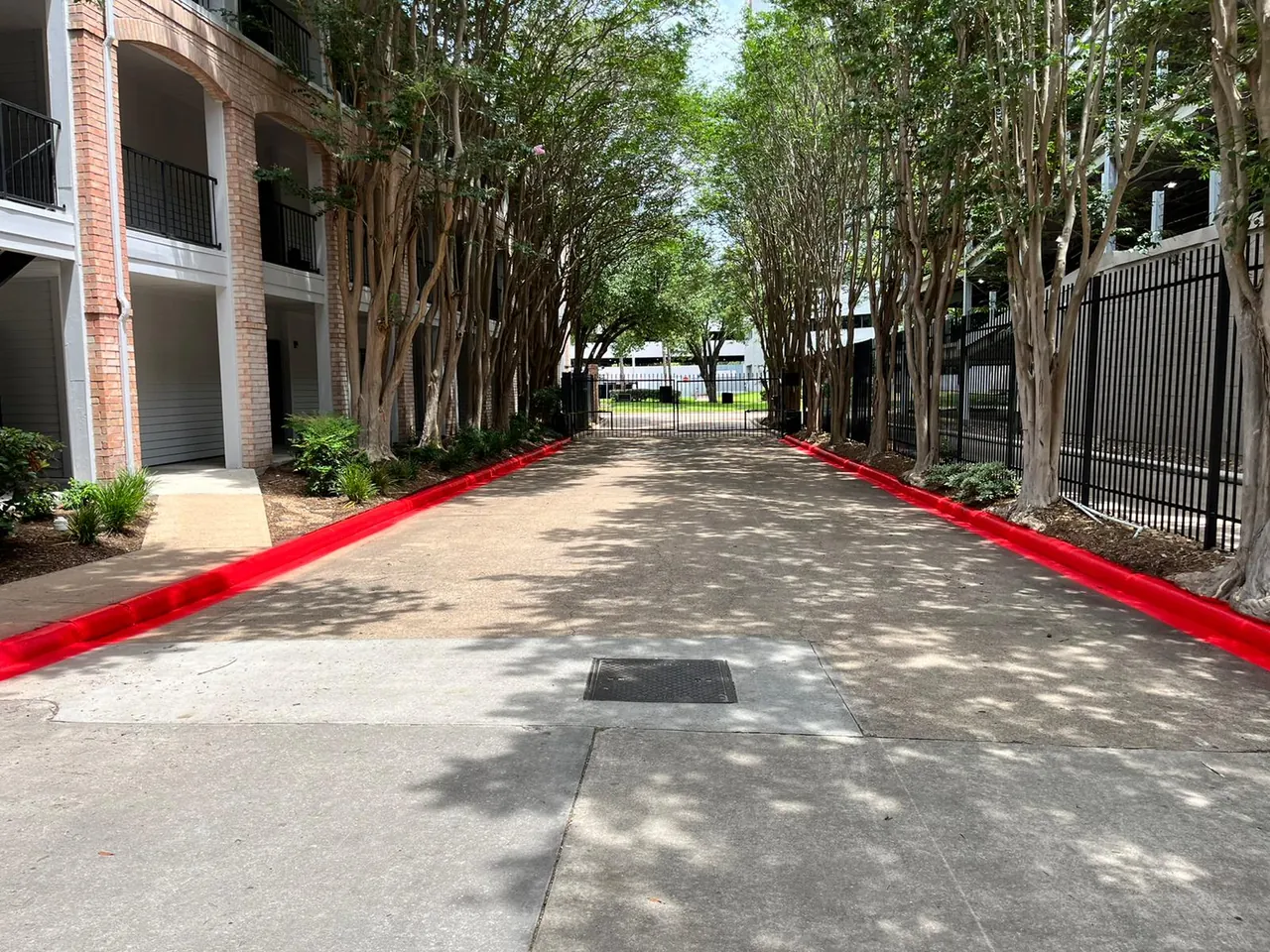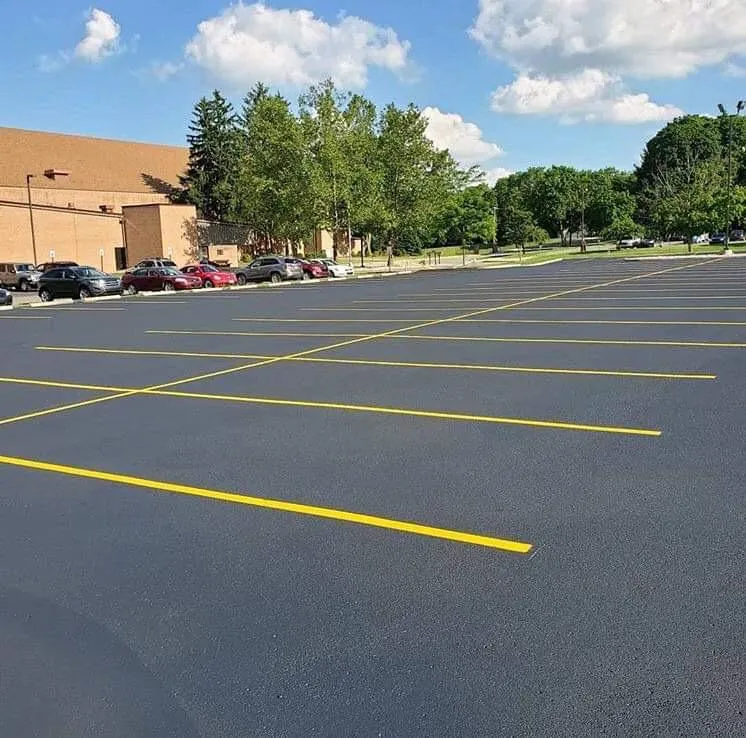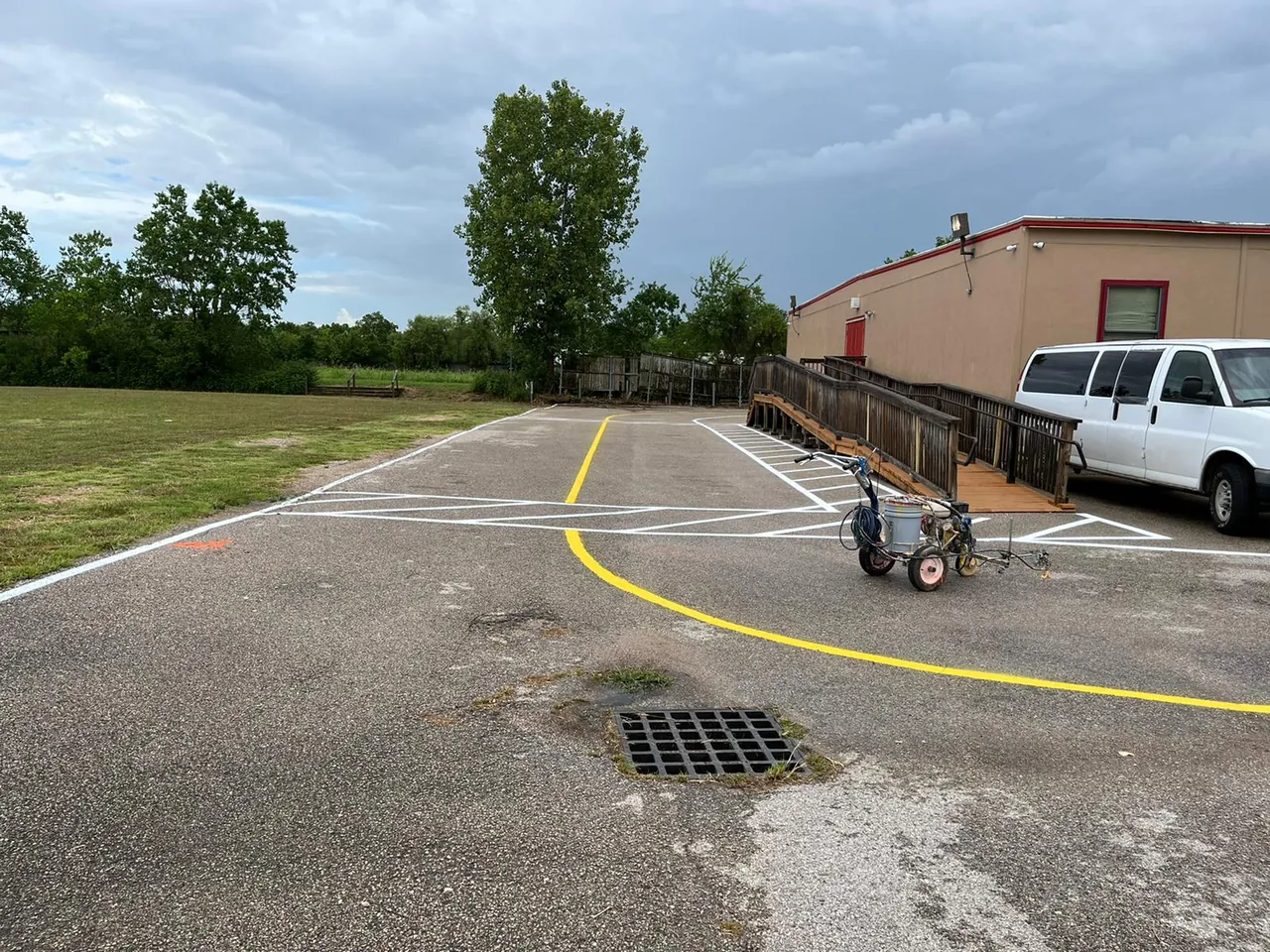
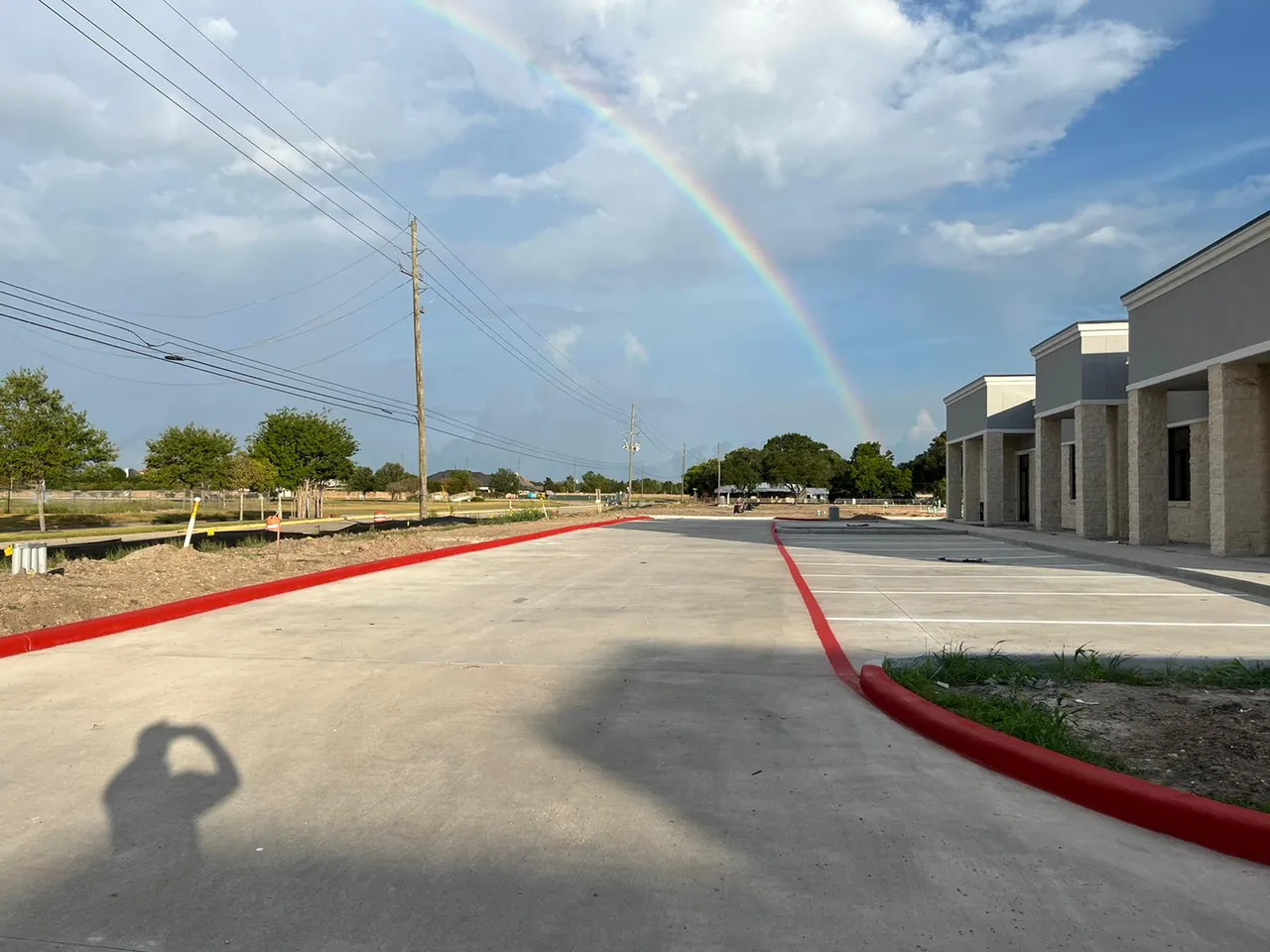
A painted crossing is one part of a pedestrian route, not proof that the route is safe. Before refreshing parking-lot markings, look at where people actually walk, where vehicles reverse and where the path continues after the painted area ends.
Walk the complete route
Start at the parking area and follow the route to the entrance. Note missing connections, obstructions, changes in level and places where a parked vehicle can project into the path. Photograph the route from both the driver's and pedestrian's viewpoints without standing in moving traffic.
Markings cannot fix a blocked walkway, unsuitable grade or an inaccessible entrance. Put those concerns on the review list rather than assuming a fresh stripe resolves them.
Identify the conflict points
Record entrances, loading movements, reversing spaces and places where pedestrians cross a drive aisle. Explain when those movements occur: a delivery period may create different constraints from normal customer parking. Do not decide the crossing position only by where an old stripe remains visible.
If visibility, vehicle speeds or the route itself are uncertain, have the appropriate property or design professional review the arrangement. Signs, lighting, physical separation and operational changes may need consideration alongside paint. A striping estimate is not a traffic-engineering study.
Keep access aisles distinct from travel lanes
Accessible parking spaces, their access aisles and the route to the entrance work together. An access aisle provides transfer space beside a parked vehicle; it should not be treated as an extra parking bay or a general vehicle lane. The complete accessible arrangement includes requirements beyond the painted symbol.
The U.S. Access Board's parking guide explains the relationship among spaces, aisles and routes. Its federal marking provisions should not be replaced with an assumed universal color scheme. State and local provisions may also apply.
Do not copy a detectable-warning detail without checking its scope
Detectable warnings are physical surface features, not a painted pattern. The requirements depend on the setting and the applicable standards. A private parking-lot connection, a transit facility and a public right-of-way are not automatically governed by identical provisions. Do not add or remove tactile surfaces based only on a general striping article.
Refer questions about ramps, grades, warnings and route construction to the responsible professional or authority before finalizing the marking plan.
Specify and maintain what was agreed
Record which crossings, arrows and boundaries are being repainted and which need review or removal. Use the specified coating system and follow its application and reopening instructions. Inspect the markings periodically for wear and review the arrangement if the property use changes. Neither fresh paint nor reflective material guarantees that drivers will yield or that a collision cannot occur.
Prepare your project request
Send the city, address, plan if available, photographs of the entire route and the access periods that must remain available. Tell us whether the concern is faded paint, a confusing layout or a construction issue. That distinction helps keep the marking scope clear.
For reference, consult the Access Board parking guide and its ramps and curb ramps guide, together with the requirements applicable to your site.