A practical way to discuss environmental priorities is to identify the material, quantity, cleanup and maintenance decisions in the actual project. An eco-friendly label alone does not show what will happen on the property or how leftover material will be handled.
Avoid painting the wrong arrangement twice
Review changes in property use before refreshing every old stripe. Identify markings to retain, remove, repaint or review. Resolving the layout first can avoid unnecessary application and later removal, without assuming that less material is always appropriate.
Do not reduce specified thickness or omit necessary preparation to make a project appear to use fewer resources. The proposed coating system must still be suitable for the work.
Use measured quantities and matching documents
List actual line lengths, widths and painted symbol areas rather than treating the entire parking lot as paint area. Obtain current product and safety data sheets for the exact materials. Compare documented information, not broad claims that every waterborne, recycled or durable product has the same benefits.
Plan material handling and cleanup
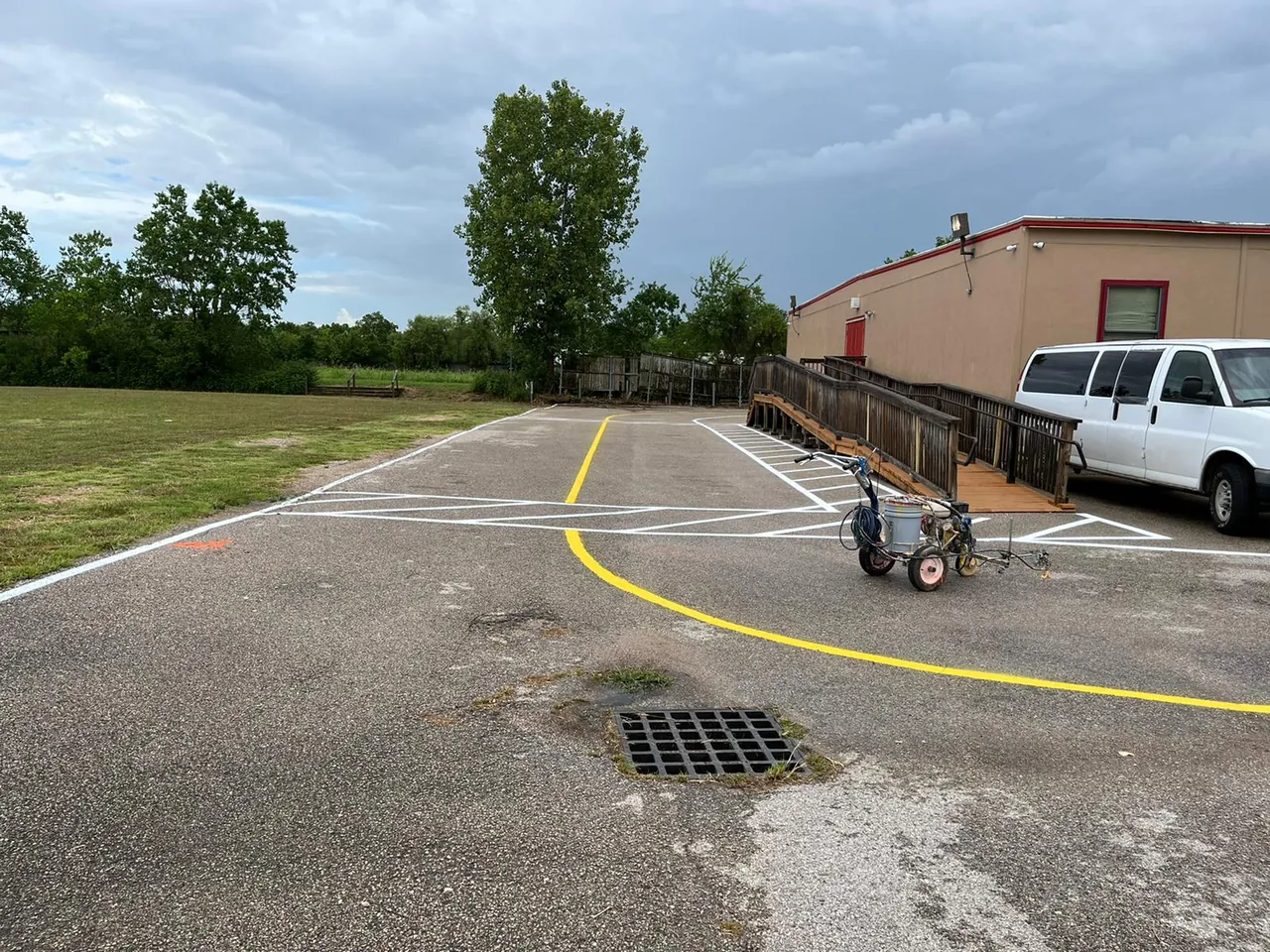
Discuss how containers, leftover coating, removed material and equipment-cleaning water will be contained and handled. Keep paint and cleanup water out of storm drains. Use the instructions and waste arrangements appropriate to the actual material and location.
The EPA construction stormwater overview identifies paint washout as a pollution-control concern. It does not mean every maintenance repaint has identical permitting obligations; determine what applies to the work.
Inspect condition rather than promise a lifespan
Keep a record of the marking scope and periodically inspect wear, visibility and surface condition. Revisit the plan when the property's use changes. Do not assume a particular system lasts a fixed number of years or that reflective stripes replace a lighting assessment.
Explain your facility requirements
Send the property address, photographs, marking priorities and your facility's material or waste-handling requirements. Clear instructions help define the proposed work.